Dr. Kevin J. Payne
Speaker on stress, burnout, and performance under pressure
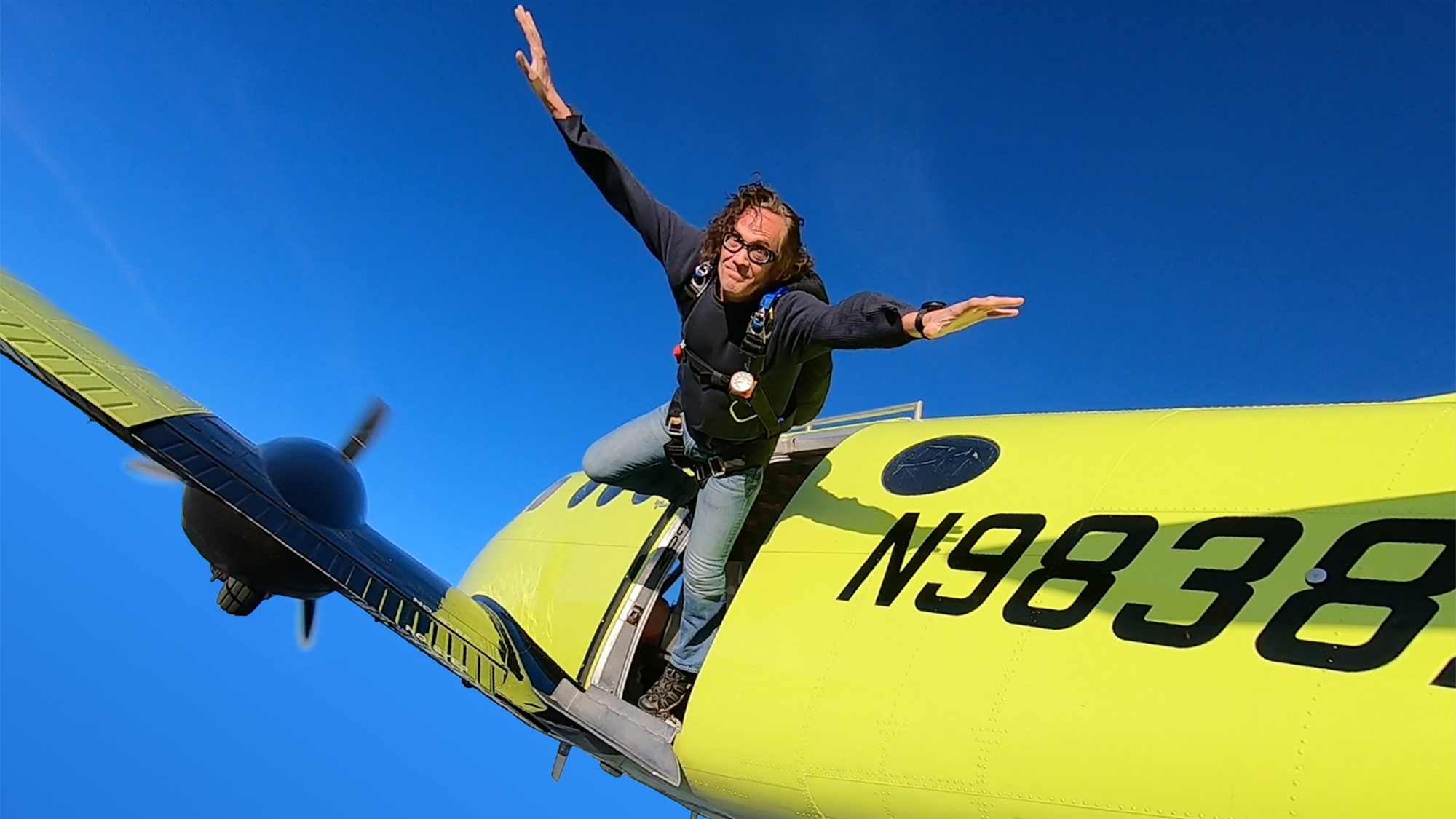
Everyone recognizes an edge at 14,000 feet.
Most of the edges we face look ordinary from the outside. But they’re still edges.
Social psychologist · author of The Edge · skydiver with MS
Photograph: Kevin C. Stone
You rested. Set boundaries. Breathed. Reframed. Tried harder. And just…managed. Somehow. Some of it even worked.
And then, somewhere inside chronic illness, caregiving, burnout, or trying your hardest under all the pressure, it stopped working. When familiar advice fails, it’s easy to conclude you failed.
The advice failed. You didn’t.
The usual advice assumes a manageable cycle — effort, recovery, return to baseline. It becomes least reliable as sustained demand presses against our actual, available capacity. That holds true for all of us. The hardest experiences don’t run on different machinery. They just make the machinery we all share easier to see.
Stress is a signal.
Not simply a “toxin” to reduce or escape. It’s a signal that traces a map of human states, from restoration through challenge to the edges of our performance and beyond. When our state changes, our rules change. The same challenge can build or damage. The same advice can help, harm, or outright fail.
The Edge replaces one-size-fits-all stress management with a better map: what supports you here, and where can you go next?
A life lived well is not stress-free.
You’re here for yourself
Start with the first 90 pages of The Edge.
Why “stress management” advice has been failing you. A better way to read the messages stress is sending. A map of the whole stress landscape (which we mostly ignore). A complete rethink of fear and how to handle it. And a summary of every chapter in the book.
90 pages, free, and yours to share.
You’re here for your people
Bring The Edge to work.
Keynotes, workshops, and diagnostics for organizations where sustained demand is outrunning capacity — with particular depth in caregiver, disability, and chronic-illness ERGs, clinical teams, and organizations where good programs keep failing.
Delivered virtually or in person.
Signature keynotes
Available virtually and in person.
Where the Usual Rules Stop Working
A better map for stress, burnout, and performance under pressure
Most stress advice assumes a manageable cycle: effort, recover, repeat. But the stress signal carries useful information across a much wider range, and the rules change as demand approaches what we can deliver.
Audiences leave able to recognize those shifts, understand why familiar tools fail under continuing load, and choose responses that fit the state they are actually in.
Burnout is a Broken Relationship
Why your people are leaving — and how to give them a reason to stay
Burnout is not just exhaustion, and resilience is not enough. Dr. Payne shows why good people and good programs still break under sustained pressure by examining the relationships among people, their work, one another, their systems, and hope.
Leaders leave with a sharper diagnosis of what is actually driving burnout — and practical places to begin rebuilding respect, trust, agency, support, and sustainable performance.
The Weight You Can’t See
How to live well and deliver under invisible chronic demand
Chronic illness, caregiving, disability, and other persistent demands can quietly disrupt the adaptive cycle that lets us meet challenge, recover, and return — while everyone else sees only the consequences.
Audiences leave with language for that invisible process, and with practical ways to protect capacity, preserve agency, and stop mistaking struggle for weakness or failure.
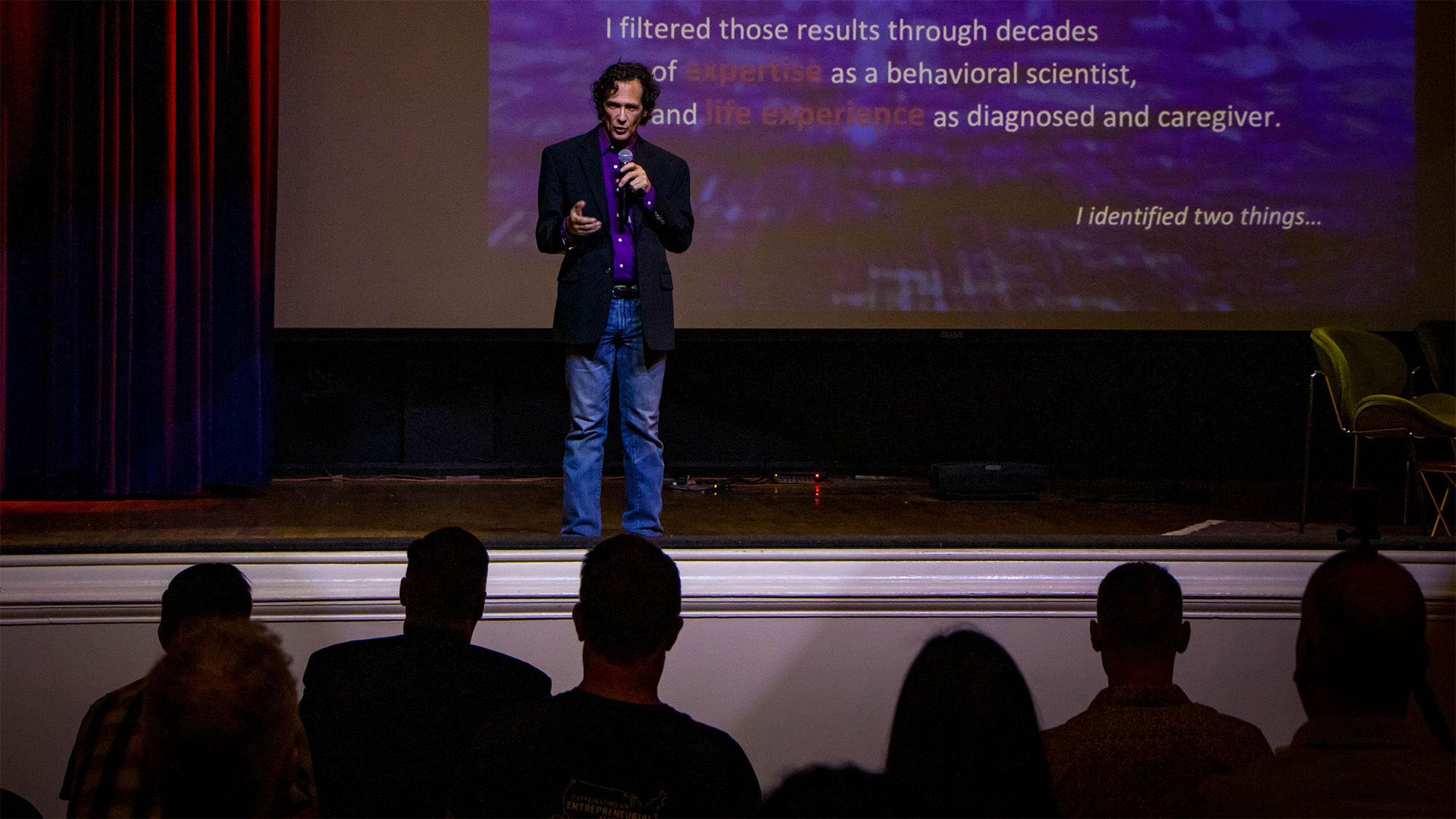
8,000 university students across 164 course sections — and a lifetime on stage before that.
Theatrical and musical productions, improv and interactive theater, classrooms, speeches, panels, debates, and media appearances.
A few minutes with Dr. Payne
Speaker reel
Arriving shortly
“Kevin was one of the most engaging speakers I had at my many analytics conferences. Years later, I remember his talk well. I still think about it and how each number/metric represents a person. Now that I’m working in the hospital setting and I see patients in the hallway I think about it even more. He uniquely combines his expertise in social science and data fluency to provide a memorable and practical experience.”
David Bertoch
Former Vice President, Analytics, Children’s Hospital Association
Organized CHA National Analytics Conferences, 1997–2023
Who this is for
Any organization carrying more sustained demand than its people can absorb. Especially useful when people have tried the standard toolkit and been left struggling — and where their leadership correctly intuits that this is not a motivation problem.
Current focus
- Teams under continuing operational load
Where demand has stopped arriving in manageable cycles. - Caregiver, disability, and chronic-illness ERGs
Where invisible load is the daily reality, not an abstraction. - Clinical teams and healthcare organizations
Where burnout is measured, costly, and resistant to the resilience programs you’ve already tried.
Also a fit
- HR, DEI, and workforce wellbeing leaders
- Patient and caregiver associations
- Conference programs
Looking for the memorable story with substance and practicality.
And why it’s different
Motivational programming is usually well-intentioned, and it works on us because it’s aimed at our deepest psyche: the story, the uplifting feeling, the inspirational surge. That surge is real. It’s also fleeting.
That’s valuable, as far as it goes, but we need more than the moment. These talks are built for both a good hour in front of an audience, and a framework that still works for them after the feeling has worn off.
More ways to work together
Keynotes lead. These options extend them.
Workshops & Training
Applied workshops, leadership sessions, ERG programs, and learning series built from The Edge and Dr. Payne’s broader, interdisciplinary curriculum. His educational approach draws on thousands of hours training thousands of students.
Organizational Evaluation & Diagnostics
Structured YLLW assessments identify where sustained demand is straining capacity, recovery, relationships, and performance — with clear findings and practical next steps. Dr. Payne’s methods identify actionable structural and behavioral factors.
Learning Series & Ongoing Support
Extend keynotes and workshops through multi-session learning, facilitated discussion, leadership or ERG debriefs, support and learning cohorts, and follow-up or longitudinal assessment using YLLW frameworks and materials.
Need to make the case internally?
Sessions can be co-funded across several groups, or drawn from central HR, wellbeing, or learning budgets. Here’s the speaker sheet to forward, and a paragraph you’re welcome to paste into an email.
Our people are carrying more sustained demand than the current supports can absorb, and the usual resilience material isn’t reaching it. Dr. Kevin J. Payne is a social psychologist and the author of The Edge, a framework for why standard stress tools become least reliable exactly when demand outruns capacity — and what to do instead. He delivers virtually or in person, and a session can be structured so several groups share one engagement. I’d like to book a short call to see whether he fits.

Why this work exists
Dr. Kevin J. Payne is a social psychologist, speaker, and consultant who studies how people succeed — or struggle — under pressure. He holds a PhD in Sociology and Psychology, and spent fifteen years as a university professor. As a research methodologist, he’s devoted over three decades of study across the social, behavioral, and biomedical sciences to his integrative account of stress, chronic illness, caregiving, and performance.
That work is also personal: he has lived with multiple sclerosis for decades, spent years as a family caregiver, and endured crushing professional burnout. He remains, weather permitting, an enthusiastic skydiver with a coach rating and more than 600 jumps (including 370 jumps in a single pandemic year).
He has lived three vantage points on the same adaptive stress machinery. He studied it professionally, through a wide variety of human-subjects research across the social, behavioral, and biomedical sciences. He was conscripted into it, by a life that stopped cooperating. And he went deliberately looking for it at an edge where feedback is immediate, honest, and consequential — which makes the mechanics of arousal, agency, learning, and recovery intimately obvious in ways that ordinary life obscures. Singularly and together, they afforded him the opportunity to reframe stress and its influence on our lives. (See The Edge’s Methodological Appendix.)

On sale 17 November 2026 · YLLW Press
The Edge
This is the book for when the standard stress advice stops working.
Eighteen chapters in four parts. The complimentary preview is the whole of Part I, plus an annotated table of contents that summarizes every chapter in the book before you spend anything.
If you want to check the work, the trail is there. A methodological appendix, roughly forty pages of endnotes, a glossary of key terms, fifteen pages of references, and a summary table — page 342 onward.
Complete Part I, chapters 1–4, plus the annotated contents. Free to download, and free to forward to your whole team.

Let’s talk about your needs.
Twenty minutes, no pitch deck. If your people have tried the standard tools and are still struggling, it’s worth finding out whether this fits.
The “wave-off”: when a jumper warns everybody he’s about to take action to save himself.
Photograph: Kevin C. Stone